
Tank entry work is inherently risky. Workers often enter dark, tight spaces with restricted mobility, poor airflow, and dropping visibility. In many cases, hazardous gases can accumulate inside the tank, meaning a single mistake can quickly escalate into a catastrophic incident.
Because of this, safety must remain at the center of every tank entry job. Strong planning, highly trained crews, and engineered equipment are vital to reducing risk during maintenance. This is exactly why specialized confined space safety systems are so critical during tank entry operations- they allow crews to work safer, faster, and with absolute control.
Tank Entry Is Different From Other Jobs
Working inside a storage tank is unlike any open-air environment. Workers cannot move freely, entry and exit points are small, and communication quickly degrades as crews move deeper inside the asset.
Conditions inside can change rapidly:
Air quality can drop without warning.
Ambient heat builds up quickly.
Slippery surfaces and low lighting create immediate physical hazards.
At the same time, maintenance crews face intense pressure to complete inspections, repairs, and cleaning work on schedule. Without proper safety and support systems, these compounding risks multiply exponentially.
The Hidden Costs of Poor Support Systems
Older tank maintenance methods frequently require workers to spend excessive time inside the confined space. Traditional stabilization methods require constant adjustments throughout the project lifecycle. Workers are forced to stop their primary tasks repeatedly to move supports or reposition materials, drastically increasing physical strain and worker exposure hours.
Furthermore, temporary or improvised setups significantly impact a facility's bottom line and the environment.
Financial & Revenue Impact
Every day a storage tank is offline represents a massive loss in daily storage revenue. Traditional, slow-moving maintenance methods prolong tank downtime, tying up capital and halting product throughput.
Environmental Stewardship
Longer project durations mean extended periods of tank venting, increased waste generation, and a higher carbon footprint from prolonged footprint operations on-site. Modern engineered systems mitigate these risks by streamlining the entire maintenance window.
Quantifying the Value: Time, Money, and Tank Downtime
Modern support systems solve these operational headaches. By utilizing advanced engineering, facilities can dramatically optimize their maintenance schedules.
The Delta P Advantage: Implementing a premier safety and cribbing system saves an average of 15 to 18 days per typical API 653 inspection.
This massive time savings is achieved because Delta P systems allow for rapid relocation. Traditional methods require crews to laboriously re-stack timber or adjust unrated scaffolding 10 to 15 times over the course of a single project. Eliminating this repetitive labor directly translates to:
Drastically Reduced Tank Downtime: Get the asset back in service weeks ahead of schedule.
Recovered Storage Revenue: Stop losing daily revenue to prolonged maintenance windows.
Minimized Worker Exposure: Less time spent adjusting equipment means fewer hours spent in a high-risk confined space.
Roof Stability: Proven Engineering vs. High-Risk Alternatives
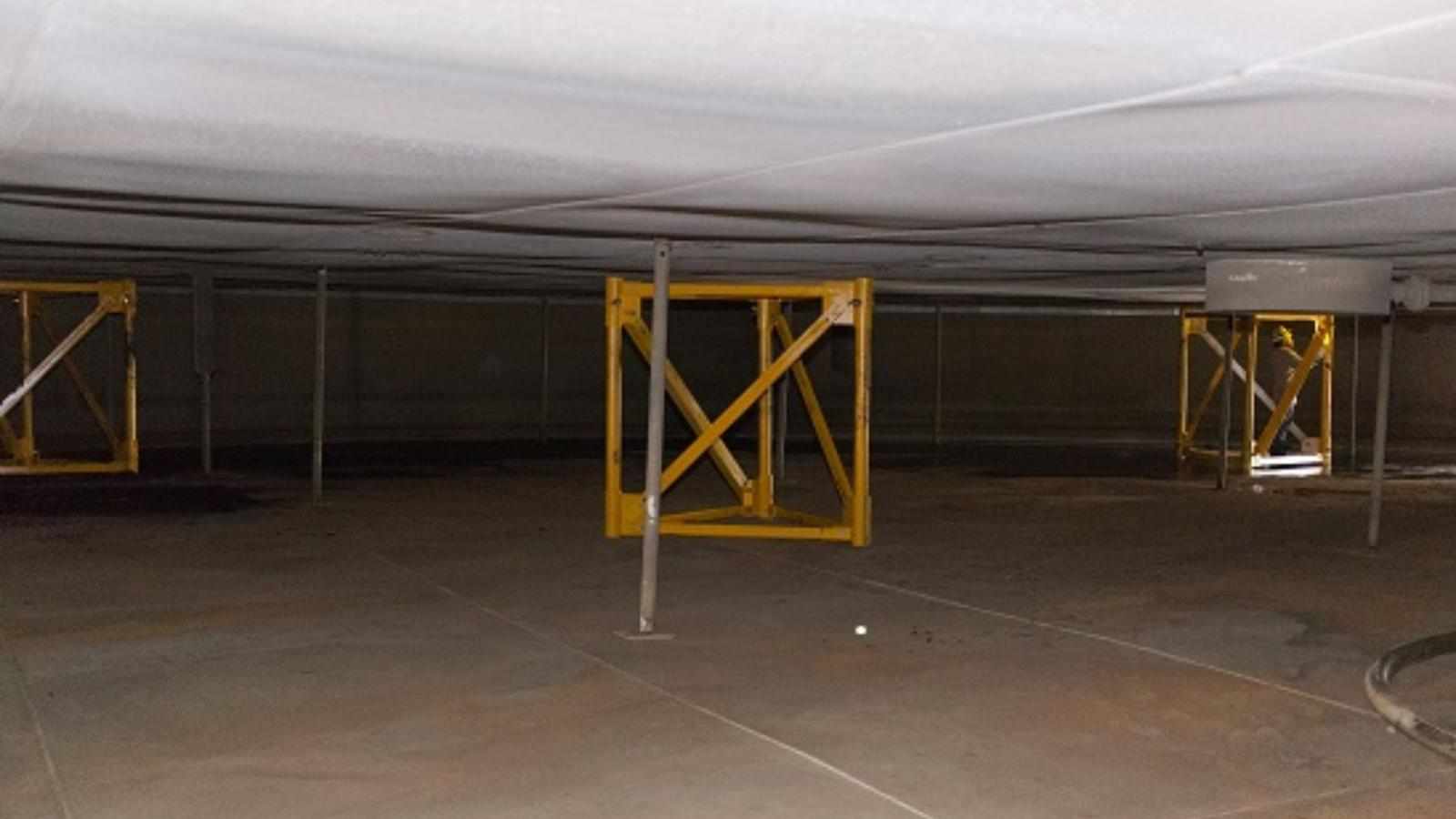
Floating roof tanks create a major hazard during maintenance, as crews must perform tasks directly beneath a suspended floating roof. If the roof shifts, tilts, or becomes unstable, the workers below face immediate, life-threatening danger.
While strong support systems are mandatory to hold the roof safely in place, not all support systems are created equal.

Using unproven methods like wood or modified scaffolding introduces unacceptable risk. A single structural failure can lead to catastrophic tank incidents, crushing injuries, fatal accidents, and severe regulatory penalties.
Clear Communication Keeps Crews Safer
Tank entry jobs depend heavily on seamless communication. Workers inside the tank must stay continuously connected with supervisors and rescue personnel outside. Without clear communication, minor anomalies can rapidly spiral into major crises.
Workers must be equipped to report changing conditions instantly, and supervisors require accurate, real-time updates. Simple, robust communication procedures keep crews focused, confident, and ready to respond effectively if conditions shift.
Safety Directly Drives Productivity
There is a common misconception that stringent safety procedures slow work down. In reality, the exact opposite is true. Safe, highly organized job sites run with superior mechanical efficiency.
By deploying advanced, stable safety systems, facilities actively reduce:
Project Downtime (saving 15–18 days per API 653 inspection)
Loss of Daily Storage Revenue
Worker Injuries and Liability
Emergency Shutdowns and Unplanned Delays
When workers know they are backed by unyielding, proven protection, their confidence increases, mistakes decrease, and productivity rises. A safe crew is inherently a more profitable, efficient crew.
Training and Expertise Complete the System
Equipment alone cannot guarantee a zero-incident project. Comprehensive training is a fundamental pillar of safe tank entry. Crews must thoroughly understand entry procedures, communication protocols, and emergency response actions.
Having experienced rescue personnel on-site adds a vital layer of defense. Their real-world field experience ensures rapid, decisive action during critical situations, transforming safety plans from paperwork into practical, life-saving protection.
The Industry Shift Toward Safer Operations
Modern industrial facilities are abandoning temporary, unproven fixes that introduce unnecessary risk into confined spaces. Today's industry leaders demand engineered reliability. This has driven a major market shift toward advanced roof support systems and formalized confined space entry protection procedures.
This proactive shift dramatically lowers worker exposure hours, protects the environment by shortening project lifecycles, and safeguards facility revenue.
Final Thoughts
Tank entry work will always carry inherent hazards. However, through rigorous planning, trained rescue teams, and robust support systems, facilities can maximize both worker protection and operational profitability.
Delta P Technology provides industry-leading floating roof cribbing systems and safety solutions engineered specifically for the rigors of tank entry work. By replacing unstable wood timbers and unrated scaffolding with a system proven to withstand lateral and rotational movements, Delta P reduces worker exposure, prevents catastrophic tank incidents, minimizes downtime, and protects your daily storage revenue.
Write a comment ...